
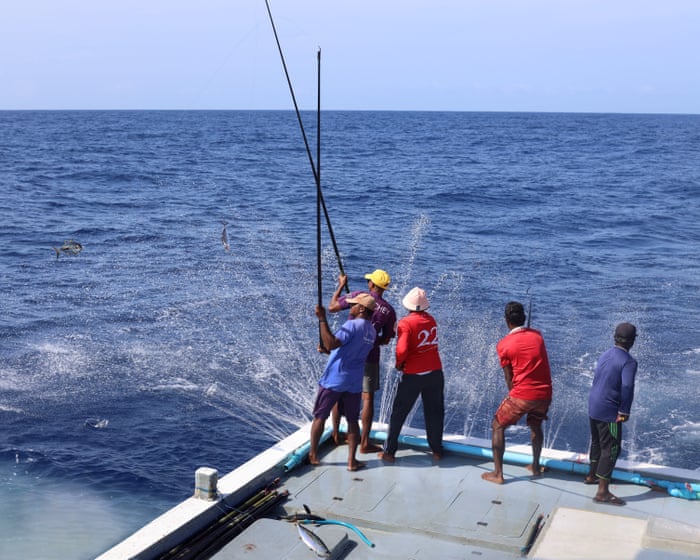
 Image Credit: theguardian.com
On the serene shores of Kanditheemu, a small island in the Maldives, the gentle sounds of the sea herald a time-honored tradition that has endured for nearly a millennium. As residents dream through the early morning, a dedicated group of fourteen fishers quietly prepare for their time-honored task: catching skipjack tuna one fish at a time. This method, known as pole and line fishing, is more than just a means of livelihood; it represents a sustainable future for the Maldivian fisheries and the health of its marine ecosystems.
A Time-Honored Routine
Under the cover of darkness, a 24-meter dhoni boat named Mas Vaali awaits its crew. Captain Ibrahim Hamid, a seasoned fisherman who embarked on this journey at the tender age of fifteen, leads the group as they navigate the Indian Ocean. For decades, Hamid has upheld the same fishing practices learned in his youth, demonstrating a deep-rooted commitment to both his family and the preservation of Maldivian waters.
Each dawn brings a new opportunity to connect with the ocean, which is vital not only for Hamid and his seven children but for the very identity of Maldivian people. As he explains, “If we all fish sustainably, the benefits—both in terms of catch volume and income—will be far greater over time.”
Why Sustainable Fishing Matters
The stakes are high. Tuna fishing is one of the Maldives' key exports, generating an annual export of over 50,000 tonnes of skipjack to Europe and North America. This fish often makes its way into cans, but it’s also a local staple that features in traditional dishes like garudiya, a flavorful broth. The fishing practices of the Maldives stand in stark contrast to more destructive methods common worldwide, such as bottom trawling and purse seining, which can wreak havoc on marine life.
According to the International Pole and Line Foundation, the pole-and-line technique used in the Maldives is among the most selective forms of fishing available, resulting in minimal bycatch. In fact, the bycatch rate stands at just 0.65%. The majority of these bycaught species, primarily mahi-mahi and rainbow runners, are sold to local resorts, with the remainder being released alive back into the ocean. This compares favorably to longline fishing, which has an alarming bycatch rate of around 28%.
Global Impact and Certification
Recognized for its sustainability, the Maldives’ pole and line fishing method has achieved certification from the Marine Stewardship Council. This designation highlights the fisheries' commitment to preserving ocean health and maintaining tuna populations for generations to come.
Hamid's dedication to sustainable fishing practices extends beyond local waters; he is acutely aware of the broader environmental implications. “Commercial fishing methods around the world can impact our tuna fisheries,” he warns. “Unsustainable practices in one part of the world can ripple out, affecting the fishing in the Maldives as well.”
Join the Conversation
The plight of the oceans is a shared responsibility. As we continue to enjoy delicious seafood, let’s also commit ourselves to sustainable choices that support fishers like Ibrahim Hamid and preserve our marine ecosystems. What are your thoughts on sustainable fishing? Share your views in the comments below, and spread the word by sharing this post with others who care about our oceans. For more insights on sustainable fishing practices, check out Marine Stewardship Council


0 Comments